Victoria's 2026 election needs more than ESG promises. It needs proof.
By Geoff Gourley · 8/17/2026
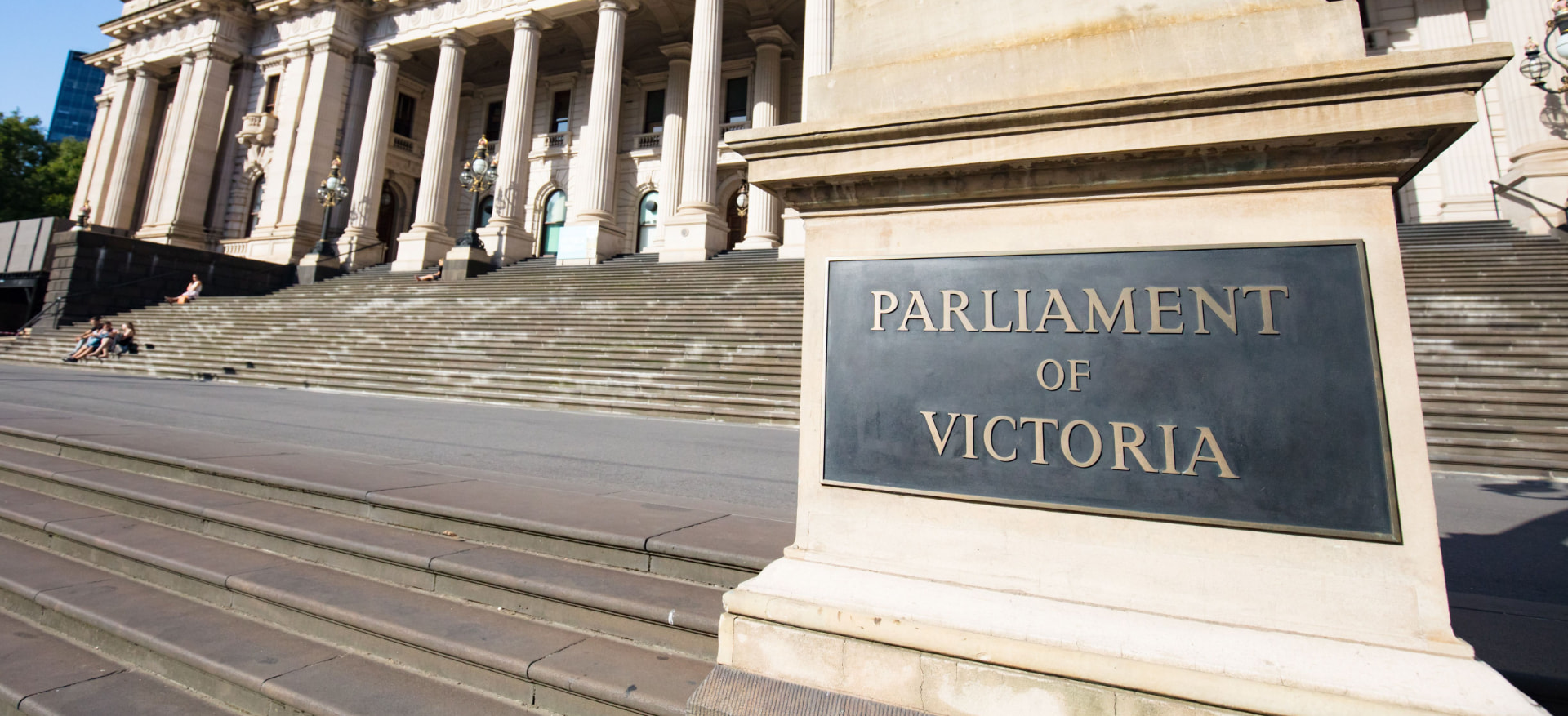
Victorians go to the polls on 28 November. Between now and then, the parties will do what parties do: launch policies, attach large numbers to them and promise a better version of the state.
Business and community leaders should be in that argument — and they should be talking to all sides. That is not a call for corporate endorsements or another round of special pleading. It is a case for testing whether the policies being assembled for the election are economically credible, socially useful and capable of surviving contact with delivery.
The decisions taken in the next term will shape Victoria's energy system, infrastructure pipeline, regional workforce, natural environment and public finances well beyond 2030. Those with direct experience of projects, communities and supply chains have information political parties need. They also have a responsibility to challenge convenient assumptions.
The central question is no longer whether Victoria can produce ambitious environmental and social policy. It plainly can. The question is whether the next government can prove that its commitments create durable public value.
Victoria has built a formidable policy stack
Over the past decade, Victoria has accumulated a substantial ESG policy architecture: legislated emissions targets, renewable energy and storage ambitions, social procurement objectives, circular-economy reforms, biodiversity programs and whole-of-government climate-risk disclosure.
The language varies across departments and election platforms. The underlying issues do not. Energy security, industrial competitiveness, workforce participation, resilient infrastructure, responsible supply chains and the condition of the natural environment are balance-sheet matters, even when the ESG label is politically unfashionable.
Victoria's Climate Change Strategy 2026–30 targets an emissions reduction of 45 to 50 per cent below 2005 levels by 2030, rising to 75 to 80 per cent by 2035. Net zero is targeted for 2045.
Those targets are real. So is the execution risk.
The transition reaches into electricity generation, transmission, storage, housing, transport, agriculture and manufacturing. It affects household bills, state borrowing, private investment, land access and regional employment. Treating it as a stand-alone environmental program badly understates both its economic promise and its political danger.
A government can commission renewable capacity and still mishandle the distribution of costs. It can approve low-emissions infrastructure with a heavy embodied-carbon footprint. It can celebrate construction jobs without building the skills or businesses that remain after the project crews leave.
The parties should therefore be asked for more than targets. They should explain sequencing, cost, workforce requirements, supply-chain capacity and the consequences if delivery slips.
The energy transition is a labour-market test
The Victorian Energy Jobs Plan estimates that the state's energy workforce could grow from about 45,000 full-time equivalent roles to roughly 68,000 by 2040.
It is an attractive projection. It is not a job guarantee.
Employment forecasts depend on projects proceeding, training places being filled, apprentices completing, skilled workers staying in the sector and employers having enough certainty to invest. Each link can fail independently.
The plan also aims to expand participation by women, First Peoples, people with disability and workers moving from other industries. Regional Victoria is expected to capture a significant share of the opportunity.
The election debate should interrogate the quality and durability of those jobs, not merely their forecast number. How many will be secure? How many will remain after construction? How much procurement will stay in regional economies? Will local firms graduate from minor subcontracting packages to higher-value positions in the supply chain?
A transition that imports capability, exhausts local contractors and leaves communities with temporary employment will not meet the promise being made in its name.
Social procurement must show what changed
Victoria deserves credit for using public purchasing power to pursue broader social outcomes. Its Social Procurement Framework covers Aboriginal businesses and employment, people with disability, priority jobseekers, women's equality, fair workplaces, regional development and environmental sustainability.
The weakness is not the range of objectives. It is the temptation to confuse activity with impact.
Expenditure with a social enterprise is an input. A worker placed on a government project is an output. Whether that person keeps the job, gains a qualification, earns more and builds a career is the outcome.
Government reporting often does the first two more readily than the third. Contractors respond rationally to what is counted, so the system can reward compliant paperwork and short-term placements while saying little about lasting change.
The next government should make social procurement a more serious economic-development tool. That means following employment and enterprise outcomes beyond contract award: job duration, retention, skills, wage progression, repeat purchasing and the capacity of Aboriginal businesses and social enterprises to win larger work.
It also means being honest about cost. Social procurement is not free. Done well, it purchases additional public value and strengthens markets. Done poorly, it adds forms, consultants and reporting layers without changing much on the ground.
Resilience is now part of the fiscal equation
The political debate about climate still gravitates towards emissions. Physical climate risk is less ideological and more immediate.
Heat, fire, flood, drought and severe storms affect power networks, roads, hospitals, housing, insurance, worker safety, agriculture and supply chains. When assets fail or communities cannot recover, the state balance sheet becomes the insurer of last resort.
Victoria's whole-of-government climate-related risk disclosure is an important step because it places climate exposure inside financial and governance systems. But disclosure is useful only if it changes decisions.
Every major public business case should state the climate assumptions embedded in its design. Projects should be tested against credible future conditions rather than historical averages. Procurement should compare whole-of-life exposure, not simply the lowest construction price.
Otherwise, Victoria risks commissioning assets that satisfy today's specification and become tomorrow's adaptation bill.
Nature and circularity belong in the investment case
Nature remains the neglected side of the ESG debate. It should not.
The BushBank program reported 2,745 hectares restored and 6,874 hectares secured for restoration as at March 2025, against a private-land restoration target of 20,000 hectares. That is tangible progress, but the distance still to travel is substantial.
The larger issue is the interaction between climate, infrastructure and land. Renewable projects, transmission lines, housing and transport can reduce emissions or improve productivity while also disturbing habitat, water systems, cultural values and local communities.
For business, natural capital is not a sentimental add-on. Operations depend on water, soil, ecosystem services, land access and community consent. Those dependencies exist whether accountants recognise them or not.
The next government should put nature-related impacts into project decisions early, when avoidance remains possible, rather than treating offsets as a late-stage licence to proceed. Where environmental credits are used, the underlying outcome must be additional, durable and independently verified.
The same discipline applies to materials. Victoria's housing and infrastructure pipeline will consume vast quantities of steel, concrete, asphalt, glass and timber. Embodied carbon is locked into an asset before its doors open, yet it is still less visible than operational emissions.
Public projects should work to credible material and carbon budgets. Designers and contractors should be tested on reuse, recycled content, durability and disassembly. Whole-of-life value must become more than a procurement slogan.
Business cannot outsource responsibility to Spring Street
Government sets policy and controls considerable purchasing power. Business makes many of the decisions that determine whether policy works.
Companies select subcontractors, buy materials, manage employment conditions and decide whether supplier claims are tested or filed. They determine whether ESG obligations reach project managers and purchasing teams or remain in a corporate report.
Large contractors should expect closer scrutiny of their evidence. Mid-sized firms face a different burden: repeated requests for emissions, workforce, modern-slavery and supply-chain data, often through inconsistent portals and questionnaires.
If government and major customers want better information, they should standardise their requests and invest in supplier capability. Pushing duplicated administration down the supply chain is not risk management. It is cost shifting.
Five questions every party should answer
The months before an election are when policy positions are still being formed. Business and community leaders should use that window constructively and put the same questions to government, opposition parties, minor parties and credible independents.
- What specific outcomes will you deliver, and what baseline will you use to measure them?
- What will the policy cost over its full life, who will pay, and what trade-offs have you acknowledged?
- Does Victoria have the workforce, supply chain and institutional capability to deliver it on the timetable promised?
- How will benefits and costs be distributed across households, regions, workers and businesses?
- What will you disclose when performance falls short?
These are not anti-government questions. They are the basic tests of serious public policy.
Victoria does not necessarily need another umbrella ESG strategy. It needs a clearer line between policy, procurement, contract management, expenditure and outcomes. Common definitions, credible baselines, fewer but better measures, named accountability and post-project evaluation would do more for trust than another glossy commitment.
That framework must also disclose underperformance. Large transitions involve delay, trade-offs and failed approaches. Reporting those problems is not weak governance. Hiding them is.
The political temptation is to announce the target and claim the benefit in advance. The governance task is less glamorous: price the policy, build the capability, manage the contracts, test the evidence and report what happened.
That is the ESG test facing Victoria at this election. Not which party publishes the longest list of promises, but which can show how its promises will create a more competitive, resilient and equitable state — and how Victorians will know if they do not.
About the author
Geoff Gourley is an Australian ESG, social impact and AI adviser, social entrepreneur and impact investor. He has advised businesses, infrastructure projects and executive teams on ESG strategy, social procurement, sustainability, natural capital and the practical measurement of social and environmental outcomes.
References
- Victorian Electoral Commission, 2026 State Election, 2026.
- DEECA, Victoria's Climate Change Strategy 2026–30, Victorian Government, 2025.
- DEECA, Victorian Energy Jobs Plan, Victorian Government, 2026.
- Victorian Government, Victoria's Social Procurement Framework, Buying for Victoria.
- Victorian Government, Social and Sustainable Procurement Objectives and Outcomes, Buying for Victoria, updated 23 June 2025.
- DTF, Victorian Government Climate-related Risk Disclosure Statement 2025, 2025.
- DEECA, Biodiversity 2037 Progress Report, 2025.
- DEECA, Progress Report for the BushBank Program, April 2025.
- Infrastructure Victoria, Victoria's Infrastructure Strategy 2025–2055, 2025.
- Victorian Government, Climate Change Act 2017 (Vic).
- Victorian Government, Social Procurement Framework and Guidance, Buying for Victoria.
- DPC, Annual Report 2024–25: Social Procurement and Procurement Outcomes, 2025.
- Victorian Government Purchasing Board, Supplier Code of Conduct.
- Victorian Government, Administrative Guideline for the Safe and Responsible Use of Generative AI in the Victorian Public Sector.
- Parliament of Victoria, Circular Economy (Waste Reduction and Recycling) Act 2021 (Vic).
- Victorian Government, Circular Economy (Waste Reduction and Recycling) Transitional Regulations 2026.